
Principle 3
Businesses Should Respect and Promote the Well-Being of All Employees, Including Those in Their Value Chains

BRSR REPORT
At HUL, we are committed to building a workplace where our people can perform at their best and thrive holistically. We prioritise employee health, safety, inclusion, and well-being through structured programmes and strong governance. Our approach is guided by a comprehensive wellbeing framework covering purposeful, mental, emotional, and physical health.
We strengthen safety through behavioural programmes and technology-enabled interventions, while our Employee Assistance Programme provides support for mental and emotional well-being. Through defined metrics and continuous monitoring, we drive ownership and enable our people to contribute meaningfully to performance and long-term value creation.
Message from Our LeadershipMessage from
Our Leadership

Our people are at the heart of our ambitions, and their safety, health and well‑being remain paramount. By empowering individuals to excel professionally and creating a supportive workplace, we build a motivated and future‑ready workforce. These efforts reinforce stakeholder confidence and ensure a responsible, high‑performing value chain.


- 100% of plants and offices assessed on health and safety and working conditions.
 0%Plants and offices assessed on health and safety and working conditions
 - 100% of return to work rate for permanent workers.
 0%Return to work rate for Permanent Workers
 - 97.2% of retention rate for permanent employees.
 0.0%Retention rate for Permanent Employees
 - 92.9% of value chain partners assessed on health and safety and working conditions.
 0.0%Value chain partners assessed on health and safety and working conditions
Essential Indicators
| Category | Total (A) | % of employees covered by | |||||||||
|---|---|---|---|---|---|---|---|---|---|---|---|
| Health insurance | Accident insurance | Maternity benefits | Paternity benefits | Day-care facilities | |||||||
| No. (B) | % (B/A) | No. (C) | % (C/A) | No. (D) | % (D/A) | No. (E) | % (E/A) | No. (F) | % (F/A) | ||
| Permanent employees | |||||||||||
| Male | 4,994 | 4,994 | 100% | 4,994 | 100% | - | - | 4,683 | 93.8% | 4,450 | 89.1% |
| Female | 2,197 | 2,197 | 100% | 2,197 | 100% | 2,197 | 100% | - | - | 1,612 | 73.4% |
| Total | 7,191 | 7,191 | 100% | 7,191 | 100% | 2,197 | 100% | 4,683 | 93.8% | 6,062 | 84.3% |
| Other than permanent employees | |||||||||||
| Male | 153 | 140 | 91.5% | 120 | 78.4% | - | - | 134 | 87.6% | - | - |
| Female | 155 | 143 | 92.3% | 132 | 85.2% | 155 | 100% | - | - | - | - |
| Total | 308 | 283 | 91.9% | 252 | 81.8% | 155 | 100% | 134 | 87.6% | - | - |
| Category | Total (A) | % of workers covered by | |||||||||
|---|---|---|---|---|---|---|---|---|---|---|---|
| Health insurance | Accident insurance | Maternity benefits | Paternity benefits | Day-care facilities | |||||||
| No. (B) | % (B/A) | No. (C) | % (C/A) | No. (D) | % (D/A) | No. (E) | % (E/A) | No. (F) | % (F/A) | ||
| Permanent workers | |||||||||||
| Male | 9,446 | 9,446 | 100% | 9,446 | 100% | - | - | 9,446 | 100% | 9,439 | 99.9% |
| Female | 840 | 840 | 100% | 840 | 100% | 840 | 100% | - | - | 840 | 100% |
| Total | 10,286 | 10,286 | 100% | 10,286 | 100% | 840 | 100% | 9,446 | 100% | 10,279 | 99.9%** |
| Other than permanent workers | |||||||||||
| Male | 6,629 | 6,629 | 100% | 6,629 | 100% | - | - | - | - | 6,614 | 99.8% |
| Female | 575 | 575 | 100% | 575 | 100% | 575 | 100% | - | - | 570 | 99.1% |
| Total | 7,204 | 7,204 | 100%* | 7,204 | 100% | 575 | 100% | - | - | 7,184 | 99.7%** |
*Health insurance coverage as per ESI for Other than Permanent Worker is 100% in all locations where ESIC is applicable as per statutory requirement. Out of the existing operating factories under the scope of reporting, 5 factories are in locations where there is no Employees' State Insurance (ESI) coverage
**One of our site i.e. Tatapuram have less than 50 workers which do not meet the minimum threshold for running a day care centre. This is also in line with the requirements of Section 11A of Maternity Benefit (Amendment) Act, 2017
| Parameter | FY 2025-26 | FY 2024-25 |
|---|---|---|
| Cost incurred on well-being measures as a % of total revenue of the company | 0.2% | 0.2% |
Following costs are considered: Health and accident insurance premium, maternity and paternity leave cost, day care cost and staff welfare expenses relating to wellbeing
| Benefits | FY 2025-26 | FY 2024-25 | ||||
|---|---|---|---|---|---|---|
| No. of employees covered as a % of total employees | No. of workers covered as a % of total workers | Deducted and deposited with the authority (Y/N/NA) | No. of employees covered as a % of total employees | No. of workers covered as a % of total workers | Deducted and deposited with the authority (Y/N/NA) | |
| PF | 100.0% | 100.0% | Yes | 100.0% | 100.0% | Yes |
| Gratuity | 100.0% | 100.0% | Not applicable | 100.0% | 100.0% | Not applicable |
| ESI* | 1.2% | 3.0% | Yes | 1.0% | 0.2% | Yes |
*As per the ESI regulation, 100% of the eligible employees and workers have been covered under the benefits
We recognise the importance of meeting the requirements of the Rights of Persons with Disabilities Act, 2016 and are taking proactive steps to support the needs of individuals with disabilities. Our Company has implemented various measures to provide disabled friendly infrastructure. In our various factories and offices, we have installed:
- Ramps
- Lowered reception desk for wheelchair access
- Elevator voice annunciator
- Evacuation chair
- Automated sliding doors to support mobility
- Tactile flooring and Braille signages
- Induction loop system
- All gender accessible toilets, fire alarm freshers and accessible guest rooms
Additionally, we are preparing the remaining factories and offices for accessibility infrastructure over a period of time and aim to achieve certification for 100% of our sites with the Minimum Mandatory Standards required under the Persons with Disabilities Act. We believe that accessibility is an essential aspect of social responsibility and are persistent in our efforts to create an inclusive environment for everyone.
Yes, we have an equal employment opportunity policy, which can be referred to on https://www.hul.co.in/investors/corporate-governance/policies/hr-policies/. We continue to believe that our policies regarding equal employment opportunities are necessary not only to comply with state and local laws and obligations, but also because they are in line with our core values and represent an important contribution to the communities in which we live and work. We have set clear goals to eliminate bias and discrimination in our policies and practices, accelerate diverse representation in our workforce, and remove barriers for people with disabilities.
We provide comprehensive paid parental leave benefits to support employees through the transition to parenthood, promote early child bonding, and enable a smooth return to work. This includes paid maternity and paternity leave with benefits for employees and workers, including those who legally adopt a child. These benefits are extended to same‑sex parents, with eligibility aligned to primary and secondary caregiving responsibilities. In addition, we offer extended caregiver leave and foster care leave, supporting employees across diverse caregiving needs and contributing to retention post parental leave.
| Gender | Permanent employees (FY 2025-26) | Permanent workers (FY 2025-26) | ||
|---|---|---|---|---|
| Return-to-work rate | Retention rate | Return-to-work rate | Retention rate | |
| Male | 95.6% | 96.7% | 100.0% | 99.3% |
| Female | 86.3% | 81.0% | 100.0% | 95.6% |
| Total | 91.9% | 97.2% | 100.0% | 98.4% |
| Category | Yes/No | Details of the mechanism in brief |
|---|---|---|
| Permanent workers | Yes | Yes. Grievances received at the factories are duly acknowledged and recorded in the grievance register and these are regularly monitored. Workers can raise grievances at https://app.convercent.com/en-us/LandingPage/99b958aa-55a1-e611-80d3-000d3ab1117e (an online portal for raising concerns and grievances), which also allows filing of anonymous complaints. We also have a website (https://www.hul.co.in/investors/corporate-governance/), a dedicated hotline (000 800 100 7096), and an e-mail ID (cobp.hul@unilever.com) for raising code* and non-code related breaches. |
| Other than permanent workers | Yes | |
| Permanent employees | Yes | Yes. Employees can raise grievances at https://app.convercent.com/en-us/LandingPage/99b958aa-55a1-e611-80d3-000d3ab1117e (an external online portal operated by an independent third party for raising concerns and grievances), which also allows filing of anonymous complaints. There is also a website (https://www.hul.co.in/investors/corporate-governance/), a dedicated hotline (000 800 100 7096), and an e-mail ID (cobp.hul@unilever.com) for raising code* and non-code related breaches. |
| Other than permanent employees | Yes |
*The Code of Business Principles (CoBP) can be referred to on: https://www.hul.co.in/files/code-of-business-principles-and-code-policies-english.pdf
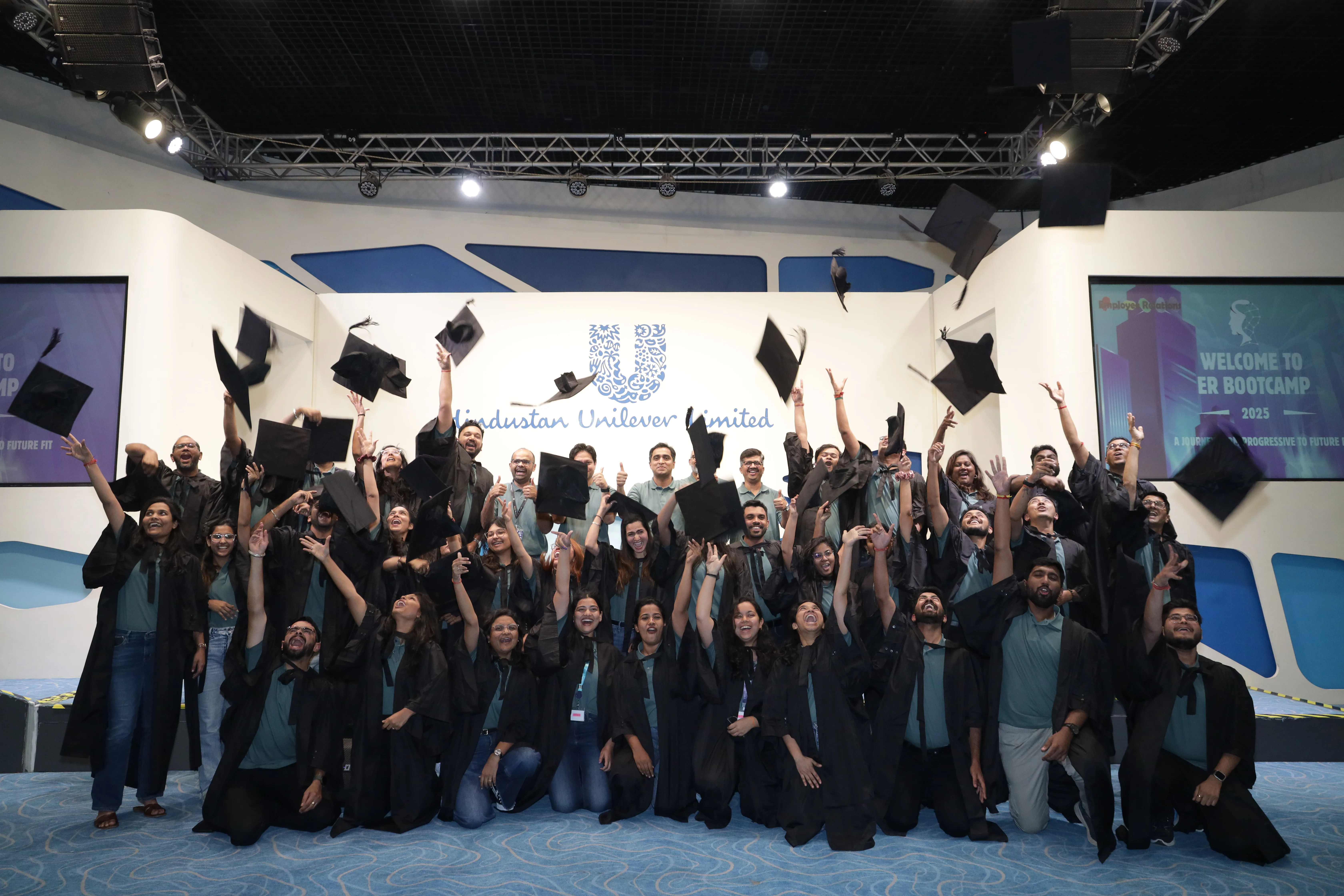
Employees and workers of the listed entity are free to form and/or join associations or trade unions of their choice, in accordance with applicable laws. The entity recognizes legitimate worker and employee associations/unions and respects the right to freedom of association and collective bargaining. Engagement with recognised unions and associations is undertaken in a constructive and transparent manner to address workplace matters, ensure fair compensation, and arrive at mutually agreed long‑term settlements covering applicable units.
| Category | FY 2025-26 | FY 2024-25 | ||||
|---|---|---|---|---|---|---|
| Total employees/ workers in respective category (A) | No. of employees/ workers in respective category, who are part of association(s) or union (B) | % (B/A) | Total employees/ workers in respective category (A) | No. of employees/ workers in respective category, who are part of association(s) or union (B) | % (B/A) | |
| Total permanent employees | 7,191 | - | 0.0% | 7,693 | - | 0.0% |
| Male | 4,994 | - | 0.0% | 5,477 | - | 0.0% |
| Female | 2,197 | - | 0.0% | 2,216 | - | 0.0% |
| Total permanent workers | 10,286 | 7,657 | 74.4% | 11,109 | 9,077 | 81.7% |
| Male | 9,446 | 7,286 | 77.1% | 10,373 | 8,759 | 84.4% |
| Female | 840 | 371 | 44.2% | 736 | 318 | 43.2% |
In line with HUL’s key business priorities, we focus on building winning skills through a performance-led learning strategy. Our learning approach is anchored in the philosophy of ‘Leaders Build Leaders’ and enabled through a cohort-based architecture that develops leadership capabilities, strengthens functional acumen, and builds enterprise-wide skills, while also ensuring mandatory compliance and ethics training for all employees. We believe learning is a critical business lever that drives performance and strengthens employee engagement through meaningful development opportunities.
| Category | FY 2025-26 | FY 2024-25 | ||||||||
|---|---|---|---|---|---|---|---|---|---|---|
| Total (A) | On health and safety measures | On skill upgradation | Total (D) | On health and safety measures | On skill upgradation | |||||
| No. (B) | % (B/A) | No. (C) | % (C/A) | No. (E) | % (E/D) | No. (F) | % (F/D) | |||
| Employees | ||||||||||
| Male | 5,147 | 4,562 | 88.6% | 4,562 | 88.6% | 5,743 | 4,657 | 81.1% | 4,657 | 81.1% |
| Female | 2,352 | 1,982 | 84.3% | 1,982 | 84.3% | 2,459 | 1,815 | 73.8% | 1,815 | 73.8% |
| Total | 7,499 | 6,544 | 87.3% | 6,544 | 87.3% | 8,202 | 6,472 | 78.9% | 6,472 | 78.9% |
| Workers | ||||||||||
| Male | 16,075 | 14,784 | 92.0% | 14,784 | 92.0% | 16,852 | 14,589 | 86.6% | 14,589 | 86.6% |
| Female | 1,415 | 1,261 | 89.1% | 1,261 | 89.1% | 1,613 | 1,232 | 76.4% | 1,232 | 76.4% |
| Total | 17,490 | 16,045 | 91.7% | 16,045 | 91.7% | 18,465 | 15,821 | 85.7% | 15,821 | 85.7% |
We are a performance-driven organisation supported by a robust performance management system. At the start of each performance cycle, units and functions set flexible goals aligned with business priorities, covering both business outcomes and development objectives. Performance is reviewed at year-end, with regular feedback and check-ins throughout the year to enable continuous improvement. Employees are provided with opportunities for role exposure, supporting long-term career progression and leadership development. For factory workers, performance reviews are conducted annually through an in-house Performance Appraisal System, with assessments based on defined job standards and outcomes communicated clearly to ensure transparency.
| Category | FY 2025-26 | FY 2024-25 | ||||
|---|---|---|---|---|---|---|
| Total (A) | No. (B) | % (B/A) | Total (A) | No. (B) | % (B/A) | |
| Employees | ||||||
| Male | 4,994 | 4,541 | 90.9% | 5,477 | 5,173 | 94.4% |
| Female | 2,197 | 1,906 | 86.8% | 2,216 | 1,976 | 89.2% |
| Total | 7,191 | 6,447 | 89.7% | 7,693 | 7,149 | 92.9% |
| Workers | ||||||
| Male | 9,446 | 9,445 | 99.9% | 10,373 | 10,372 | 99.9% |
| Female | 840 | 840 | 100.0% | 736 | 736 | 100.0% |
| Total | 10,286 | 10,285 | 99.9% | 11,109 | 11,108 | 99.9% |
*As per the Company’s policy, every employee / worker is eligible for an annual performance and career development review. At HUL, we follow a calendar year cycle i.e., January to December for performance and career development review. In the above table, % of employees / workers not covered are largely those who have joined the organisation in the period January 2026 to March 2026 as they would be covered in next year’s performance review.
We maintain a robust occupational health and safety management system for all employees and workers, governed by its Occupational Health and Safety (OHS) Framework Standards. The Company is committed to providing a safe and healthy work environment for employees, visitors, and communities around its operations. Management at all levels is accountable for the effective implementation of health and safety requirements across operations, including employees and visitors.
Occupational health and safety risks are identified and managed in line with Unilever's Occupational Health and Safety Risk Assessment Methodology. Risk assessments are embedded into routine operations and the management of change for new processes, equipment, and methods of working. Assessments are conducted for both routine and non-routine tasks, and appropriate control measures are implemented to mitigate identified risks. Non-routine activities are governed through the Permit-to-Work process supported by task-specific Method Statements. Job Safety Assessments are developed for permitted tasks and are made available at the worksite along with the relevant permits.
Yes, workers are encouraged to report work-related hazards through offline as well as online modes. We take adequate measures to mitigate these hazards and communicate the same to the workers.
Yes, the employees and workers have access to non-occupational on-site medical and healthcare services for common health conditions and emergency management. In addition, employees and workers can avail medical services from a chain of hospitals across the country through the insurance coverage extended by the organisation.
| Safety incident/number | Category* | FY 2025-26 | FY 2024-25 |
|---|---|---|---|
| Lost Time Injury Frequency Rate (LTIFR) (per one million-person hours worked) | Employees | - | - |
| Workers | 0.06 | 0.23 | |
| Total recordable work-related injuries | Employees | 2 | 1 |
| Workers | 11 | 24 | |
| No. of fatalities | Employees | - | - |
| Workers | 1 | - | |
| High consequence work-related injury or ill-health (excluding fatalities) | Employees | - | - |
| Workers | 1 | 1 |
*Including in the contract workforce
We strive to integrate safety into all our business processes. Our safety and health management system follows the principle of Plan, Do, Check and Act. We assess credible risks and take appropriate measures to mitigate them. Periodic training, capacity-building sessions and regular mock drills are conducted at each unit. Safety induction is mandatory for all new employees and workers, including contractors, security personnel and staff. Safety incidents are reported and investigated, with lessons learned communicated widely within the organization.
Our approach is supported by continuous improvement objectives and periodic reviews through the Safety and Health Sub-Committees, each led by a Management Committee Member. A robust audit mechanism verifies compliance with internal standards and statutory requirements. We promote a safety culture through behavioural interventions at all levels, emphasizing the importance of safety as a personal value. Positive safety behaviours are encouraged, and unsafe behaviours are corrected through established procedures. We maintain a comprehensive emergency response plan and related facilities at all sites, training employees to respond effectively.
We also utilize digital tools to improve safety of our employees. Our team, comprising over 150 experienced and well-trained medical professionals (including physicians and nursing staff), is committed to maintaining a safe and healthy working environment. For instance, all employees can benefit from periodic health evaluations for health issues, health promotion programs, access to market-leading medical care, and other support facilities.
At factories, there is a formal grievance redressal mechanism for workers along with a defined escalation matrix to ensure timely closure of complaints. In addition to these, complaints can also be raised through our online portal i.e., ‘Convercent Tool’, which is available on our website: (https://app.convercent.com/en-us/LandingPage/99b958aa-55a1-e611-80d3-000d3ab1117e )
| Category | FY 2025-26 | FY 2024-25 | ||||
|---|---|---|---|---|---|---|
| Filed during the year | Pending resolution at the end of year | Remarks | Filed during the year | Pending resolution at the end of year | Remarks | |
| Working conditions | 1 | - | - | - | - | - |
| Health and safety | - | - | - | - | - | - |
Health, safety and working conditions across all premises are assessed against SHE Standards through a structured assurance framework, comprising periodic self-assessments, and global and external audits.
| Category | % of your plants and offices that were assessed (by entity or statutory authorities or third parties) |
|---|---|
| Health and safety practices | 100% |
| Working conditions | 100% |
All safety incidents are investigated for root causes, with corrective actions taken to prevent recurrence. Audit gaps are tracked and resolved within set timelines. In FY 2025–26, we enhanced our Safety & Health Policy and launched a safety pledge campaign across sites to promote safe behaviour among staff and contractors. We reinforced our actions around improvement of risk identification, preventive controls, and safety governance, such as enhanced assessments, contractor safety management, capability-building programs, and wider sharing of lessons learned. Digital tools and standardized processes were used to streamline incident reporting and monitor corrective actions. These measures drive ongoing improvement in health, safety practices, and workplace conditions.
Leadership Indicators
Yes, we extend requisite support in the form of ex gratia to the legal heirs of all full-time employees and workers in the event of death during their service with us.
Our Responsible Partner Policy (RPP) includes a set of mandatory requirements that all our suppliers need to meet to do business with us. Under RPP, value chain partners are required to comply with all applicable laws and regulations of the country where we undertake operations.
| Category | Total no. of affected | No. of employees/workers that are rehabilitated and placed in suitable employment or whose family members have been placed in suitable employment | ||
|---|---|---|---|---|
| FY 2025-26 | FY 2024-25 | FY 2025-26 | FY 2024-25 | |
| Employees | - | - | - | - |
| Workers | 2 | 1 | - | - |
Yes, we conduct retirement workshops for retiring employees. The Rewards and Human Resources teams conduct financial well-being sessions periodically and extend support in outplacements for redundancy cases. Furthermore, with the ‘Future Fit’ model, we upskill our workforce to equip them with digital and non-digital skills, which helps hone their existing skillsets.
Our Responsible Partner Policy (RPP) sets out the requirements that all our suppliers must meet to do business with us. Our RPP and its Fundamental Principles embody our commitment to responsible, transparent, and sustainable business.
Each fundamental principle of the RPP provides guidance on what we expect from our suppliers. We are committed to working with our suppliers on this journey of continuous improvement.
We also verify alignment to and implementation of the RPP's mandatory requirements using supplier self-declarations, online assessments and independent verification, including third-party audits which are performed for designated high-risk countries and supplier types.
| Category | % of value chain partners (by value of business done with such partners) that were assessed |
|---|---|
| Health and safety practices Working conditions | We conduct periodic risk assessments of our suppliers using country risk and commodity risk data from external third-party risk data providers. As of 31st March, 2026, 92.9% of the suppliers (by value of business done) have undergone risk assessment and are compliant. |
During the reporting period, no significant risks / concerns were identified in the assessment of our suppliers. We expect our partners and their employees or contractors to report actual or suspected breaches of our RPP. We will investigate any non- conformity reported in good faith and discuss findings with the partner. If remediation is needed, we work with the partner to identify the root cause of the issue and to develop a time-bound corrective action plan to resolve the failure effectively and promptly. By working with partners to overcome any issues, we support the betterment of their business and, most importantly, promote respect for human rights. We conduct regular audits, and both third-party audit companies and suppliers are responsible for continuously updating us with the audit outcome on a digital system. Audit companies are mandated to report the audit documentation and the outcome of the initial and follow-up audits, while suppliers are mandated to report corrective actions and progress against each non-conformance identified, both within certain specified timeframes.