
Message from CEO & MD

Dear Stakeholders,
I am pleased to share our Business Responsibility and Sustainability Report (BRSR) for FY 2025–26.
At Hindustan Unilever, our strategy is anchored in the belief that growth and responsibility must go hand in hand. In an increasingly complex world, where we face economic, environmental and social challenges, sustainability continues to be our focus. Today, more than ever, progress on sustainability is inseparable from business performance, and we are committed to leading with conviction. We continue to focus on four pillars where we believe we can make the most meaningful impact: Climate, Nature, Plastics, and Livelihoods.
Over the years, we have made strong progress against our ESG goals. In our manufacturing operations, we have reduced CO2 emissions by 99% (per tonne of production), water usage by 58% (cubic metre per tonne of production), and total waste generated by 53% (per tonne of production) in FY 2025–26 compared with our 2008 baseline.
Decarbonisation continues to be a priority and an opportunity for us to build business resilience. Across our operations, we are transitioning away from fossil fuels to renewable energy. All manufacturing sites are coal- free, with 100% renewable electricity. Leveraging science and innovation, we are redesigning and reformulating our products to reduce emissions without compromising performance and affordability. One example is low-GHG soda ash produced via a carbon capture and utilisation route in collaboration with Tuticorin Alkali Chemicals and Fertilisers Limited (TFL), which is used in our laundry products.
We are driving impact beyond our value chain through industry action, as a founding member of RECEIC (G20, Government of India initiative), accelerating the shift in chemicals from fossil-based to bio-based and renewable ingredients.
On plastics, we have made good progress. We are committed to tackling plastic waste by looking at new ways to reduce, reuse, and recycle our packaging. Beyond our own value chain, Project Circular Bharat (PCB) is our endeavour to accelerate circularity in India by creating end-to-end, financially viable recycling models. This program includes driving behaviour change among citizens, social inclusion of waste workers, and promoting recycling infrastructure at scale in partnership through material recovery facilities. The programme has scaled across more than 10 cities with over 25 partners, including central and state governments, corporates, recyclers, NGOs, and startups. We have also partnered with NITI Aayog's Atal Innovation Mission, and NSRCEL IIM-Bangalore to accelerate 50 circular economy startups over the next 3 years.
We are also working across our value chain to protect and restore natural resources, with a focus on regenerative agriculture practices and deforestation-free sourcing across our key crops. We have over 97% deforestation-free supply chain in palm oil, paper and board, tea, soy and cocoa.
Water is core to our business and through active water stewardship programs in our factories we have reduced water consumption significantly. Our Chhindwara and Hosur sites have earned the prestigious Alliance for Water Stewardship Platinum certification that benefits both, our operations and local communities. Beyond our operations, we continue to help secure India’s water future, strengthen water conservation, and enhance water-dependent livelihoods through the Hindustan Unilever Foundation. Since 2010, we have enabled a cumulative water conservation potential of over 4.5 trillion litres through partnerships and community-led programmes.
Our social impact programmes continue to empower communities. Project Shakti, launched more than two decades ago, remains a powerful platform for women’s empowerment in rural India. Prabhat, our sustainable community development initiative, has improved livelihoods, health, and nutrition while strengthening environmental stewardship around our factories and depot sites. Over the last 12 years, Prabhat has positively impacted more than 120 lakh people across 12 states and 2 union territories. SAFAL (Skills Academy for Advancement of Livelihoods) has benefited over 3.2 lakh young people in 21 states, a significant milestone.
As India rapidly urbanises, we see a growing need for better hygiene & sanitation solutions. Suvidha, our pioneering social innovation model for urban hygiene and sanitation, has evolved into a city-wide, climate-resilient WASH solution serving over 6 lakh people across 24 centres in Mumbai. What began in 2016 with one centre in a Mumbai slum is today a globally recognised model, supported by the Government, HSBC India, and JSW Foundation, and acknowledged by institutions such as the World Economic Forum. To enable national replication, we have signed an MoU with the Ministry of Housing & Urban Affairs and set up a Centre of Excellence to provide technical support to cities across India.
At HUL, sustainability is not a standalone initiative; it is how we do business. It fuels innovation, strengthens trust, reduces costs, and creates long-term value for all our stakeholders.
We have come a long way, but the journey ahead demands bold, decisive, and inclusive leadership. Together, with partners across the value chain, communities, and all of you, we are confident of shaping a future that is responsible, resilient, and full of possibility.
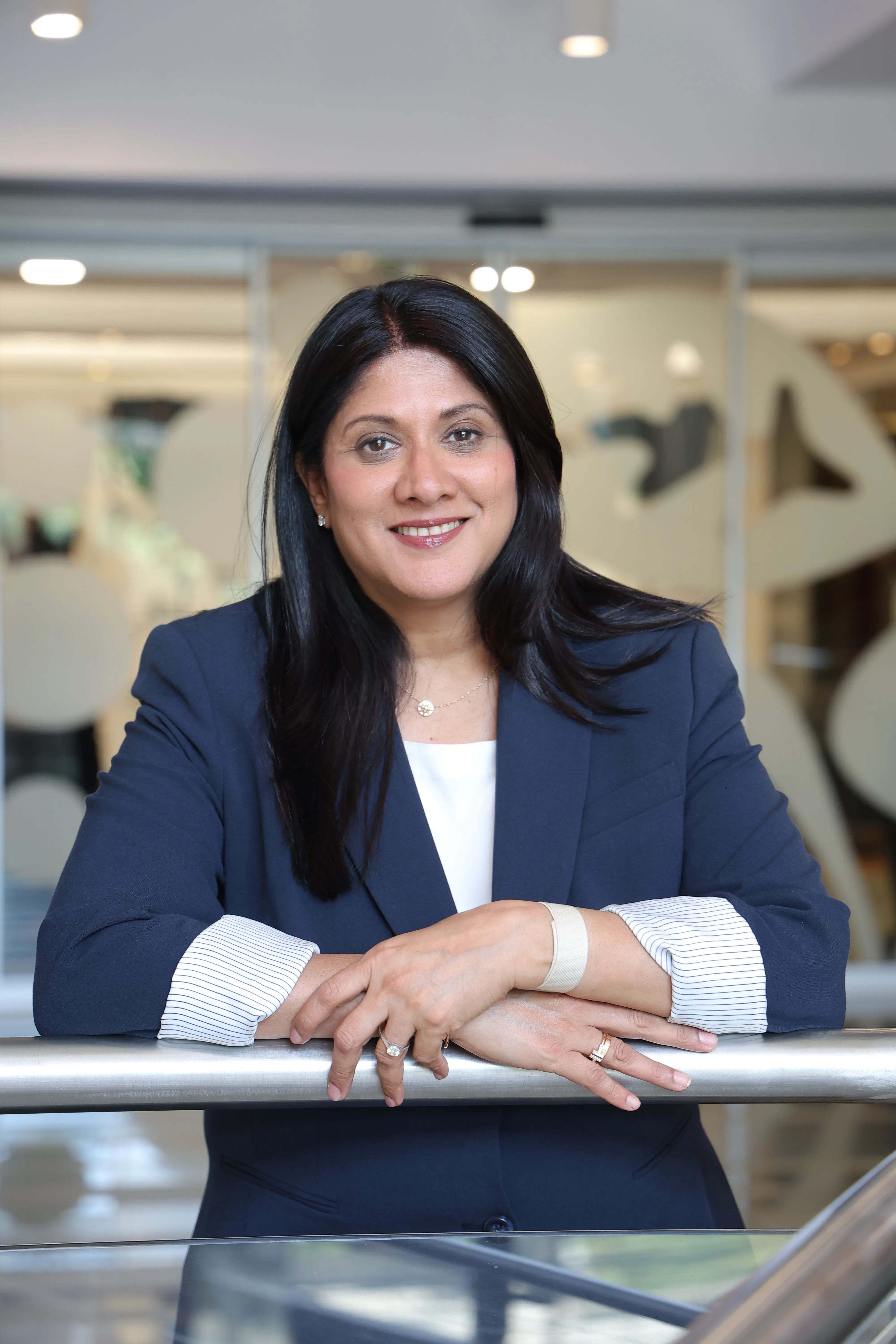
Priya Nair
Chief Executive Officer and Managing Director